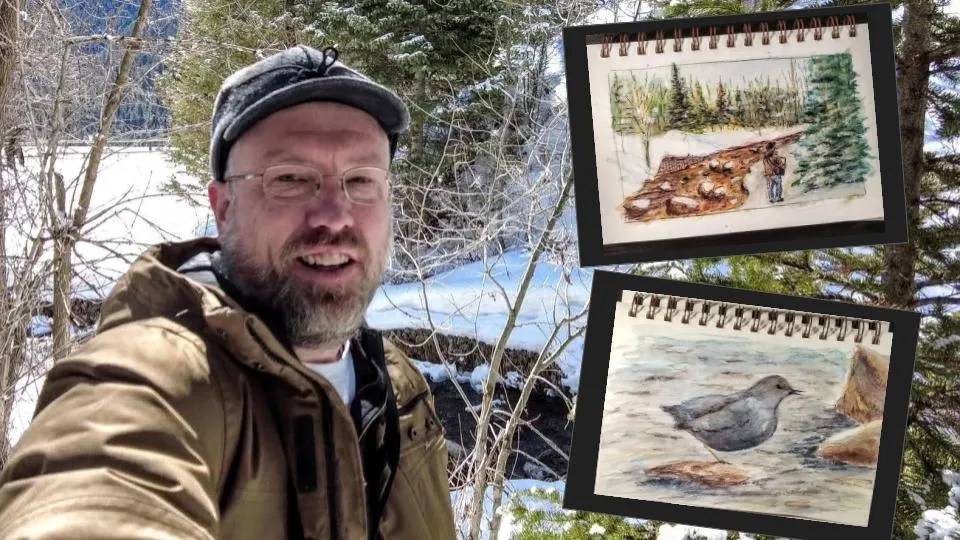
One of the most popular videos on my YouTube channel is my least favorite. It's one where I sketched in a sketchbook which I don't like normally like doing. (I prefer loose papers)
I also used Inktense pencils which are great pencils, and I do recommend them, but I don't actually use them very much.
So why do I think the video did so well?
I think is was because I showed something unusual.
You can check out that video here: https://youtu.be/y7usT1AG9Jo
I have learned a lot from watching videos or reading books and articles about making art but I rarely seek out a solution to a problem until I have already tried (and often failed) first. I'm kind of a try-first, learn-later type. I can't resist trying new ways to create art and I'm curious to see what happens when I try something new.
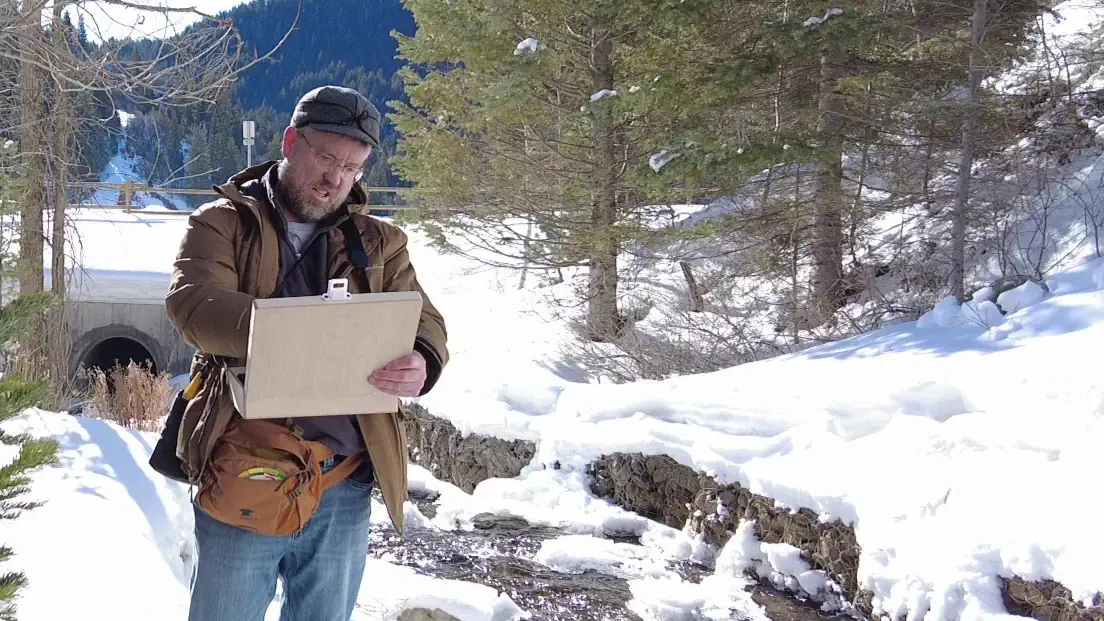
Learning something new is what happened when I went into the mountains to sketch by stream with Inktense pencils and a ballpoint pen.
It was a pretty simple experiment in a simple sketchbook but the results surprised me.
I wasn't looking to make it a finished painting. I just wanted to get outdoors and practice with the Inktense pencils
When I sketch outdoors, I'm not trying to copy the scene exactly. I'm just trying to get an impression of it and have a little fun ad-libbing.
I think the focus on curiosity rather than completion is key
Surprisingly Opaque White
I read online how the Inktense white could be quite opaque but I hadn't really tried it myself. At first, I just applied the white dry and that didn't seem to work like I hoped. Was it a failure? Maybe.
What happens if you wet it? That didn't appear to work either. Another failure? Maybe.
Then the wet Inktense it started to dry. Success. I could see it became more opaque as it dried. I didn't fail, I just didn't wait long enough for the result.
I'm not sure why I was surprised by that because other colors change when they dry, so why not white?
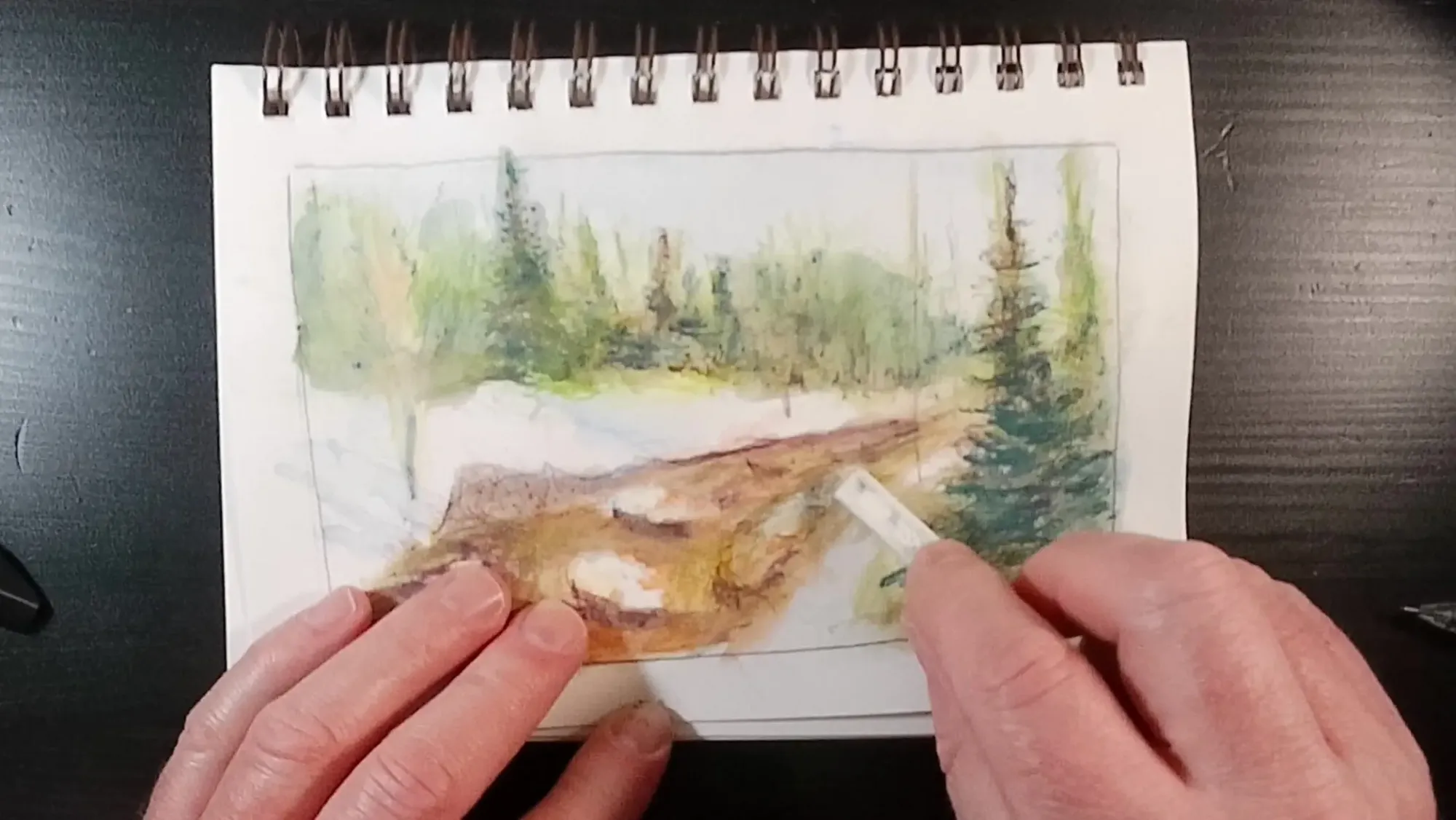
Wanting to experiment some more, I decided to apply the pigment directly to my wet brush and then to the paper. This laid it on really thick and I was able to create an entire snow bank over a previously colored area. I was really surprised at how well it worked! All I need to do was try and let the process unfold.
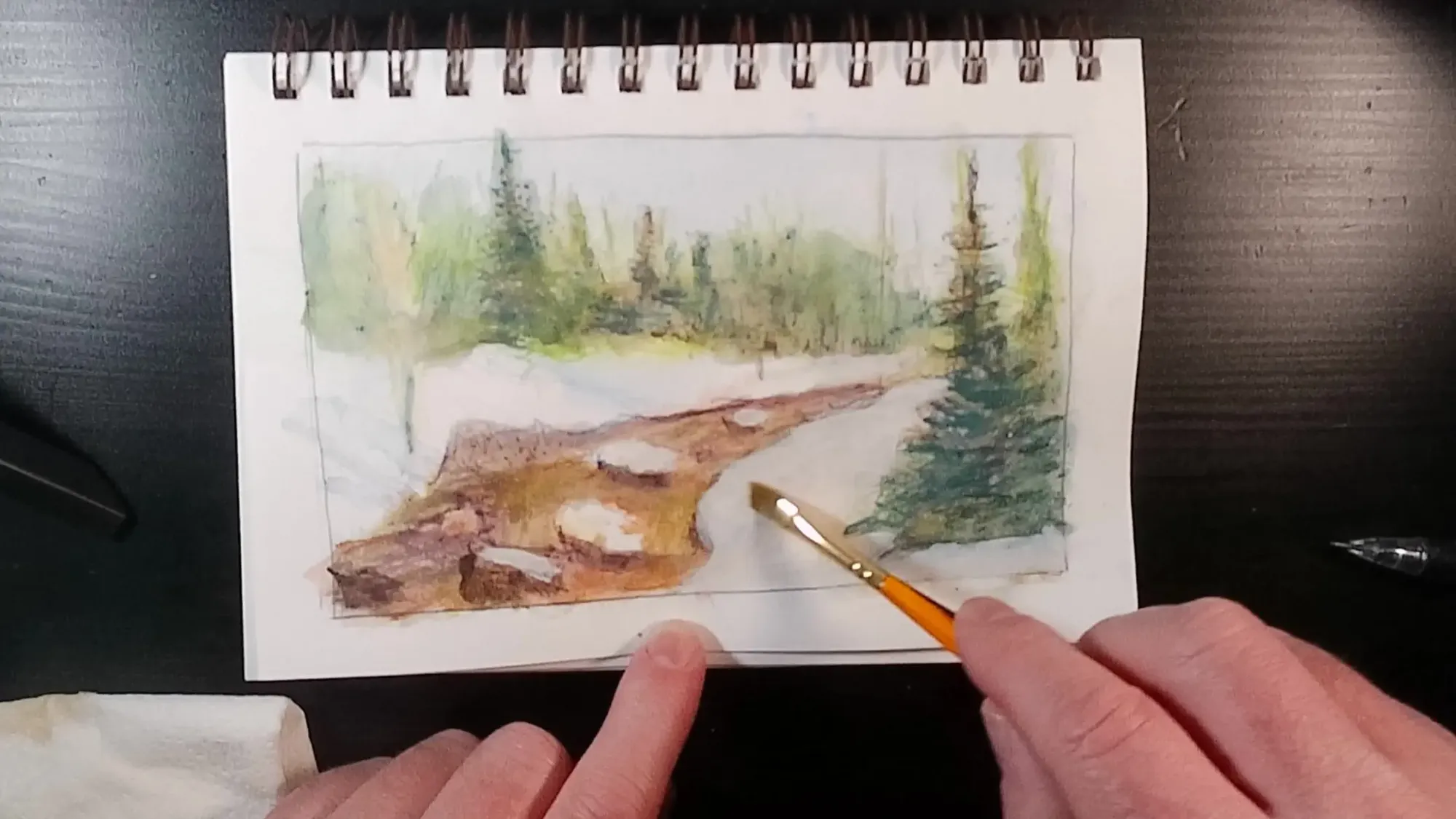
Ballpoint Pen Sketching
Once I got home, I decided to relive the experience of painting in the mountains by sketching myself into the scene to solidify the memory. I was curious to know if I could even do it. I don't typically draw the human figure.
Again, since I wasn't too worried about a finished work of art, I just let myself practice, be curious, and have fun with it. Using a ballpoint pen prohibited me from erasing and fixing. I had to accept what I drew.
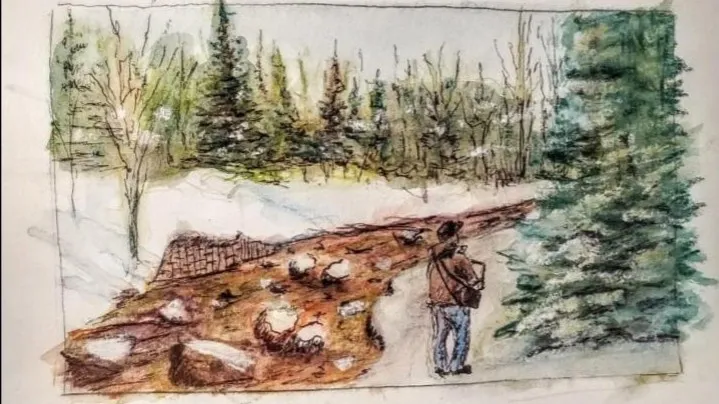
I didn't get a great result, but I've since attempted other figure sketches and each one gets a little better. I have to let the process of learning to draw the figure unfold.
Sketchbook Freedom
Even though I said I prefer loose paper over bound sketchbooks, the cool thing about sketchbooks, is the freedom play around with different techniques just to see what happens. It's nearly impossible to frame a sketchbook or sketchbook page so I know that it ultimately never will be a museum worthy work of art.
That's especially true if you don't try to keep a perfect sketchbook. I fully recommend keeping a sketchbook as an exercise in practice and curiosity rather than trying to create a work of art.
What I Learned
I had no idea that Inktense white pencil was so opaque until I tried it.
I wouldn't have sketched myself into the scene if I didn't simply wonder if I could.
Most of what I've learned about making art has started with an experiment in curiosity.
What will you try in your sketchbook?